castlevania symphony of the night redefined gaming forever
Table of Contents
- The Evolution of Castlevania: Symphony of the Night in the Franchise’s Legacy
- Chronological Breakdown of Key Castlevania Titles Leading to Symphony of the Night
- Design Philosophy: How Symphony of the Night Departed from Predecessors
- Konami’s Shift Toward a Darker, Mature Tone
- Visual and Aesthetic Innovations in Symphony of the Night
- Gameplay Mechanics: Mastering Castlevania: Symphony of the Night ’s Metroidvania and RPG Hybrid
- Core Mechanics: Movement, Combat, and Exploration Synergy
- Progression Structure: Unlocking Areas, Weapons, and Abilities
- Lore and Characters: Unraveling Dracula’s Legacy in Castlevania: Symphony of the Night
- The Origins of Dracula: Immortality, Fall, and the Loss of Castle
- The Vampire Lineage: Alucard, Death, and the Cursed Bloodline
- Shanoa: The Tecnica Descendant and Her Connection to Death
- Soma Cruz: Humanity vs. Monstrosity and the Final Transformation
- The Church vs. Vampires: Holy Water, Medallions, and the Crusade Against the Undead
- Sypha Belnades’ Rebellion and Her Role as a Double Agent
In 1997, Castlevania: Symphony of the Night shattered expectations by transforming a once-linear action-platformer into a sprawling metroidvania masterpiece. Konami’s bold reimagining introduced non-linear exploration, gothic horror storytelling, and RPG depth, setting a new benchmark for the franchise. This was not just an evolution—it was a revolution that redefined how games could blend combat, lore, and atmospheric design into an immersive experience.
The game’s departure from its 8-bit and 16-bit predecessors marked a turning point in gaming history, influencing generations of developers from Hollow Knight to Blasphemous. With its anime-inspired visuals, haunting soundtrack, and layered narrative, Symphony of the Night became more than a game—it became a cultural artifact. Yet, its legacy lies not just in its innovation but in how it wove Dracula’s dark mythos into a deeply personal journey for players navigating a decaying castle filled with secrets.

The Evolution of Castlevania: Symphony of the Night in the Franchise’s Legacy
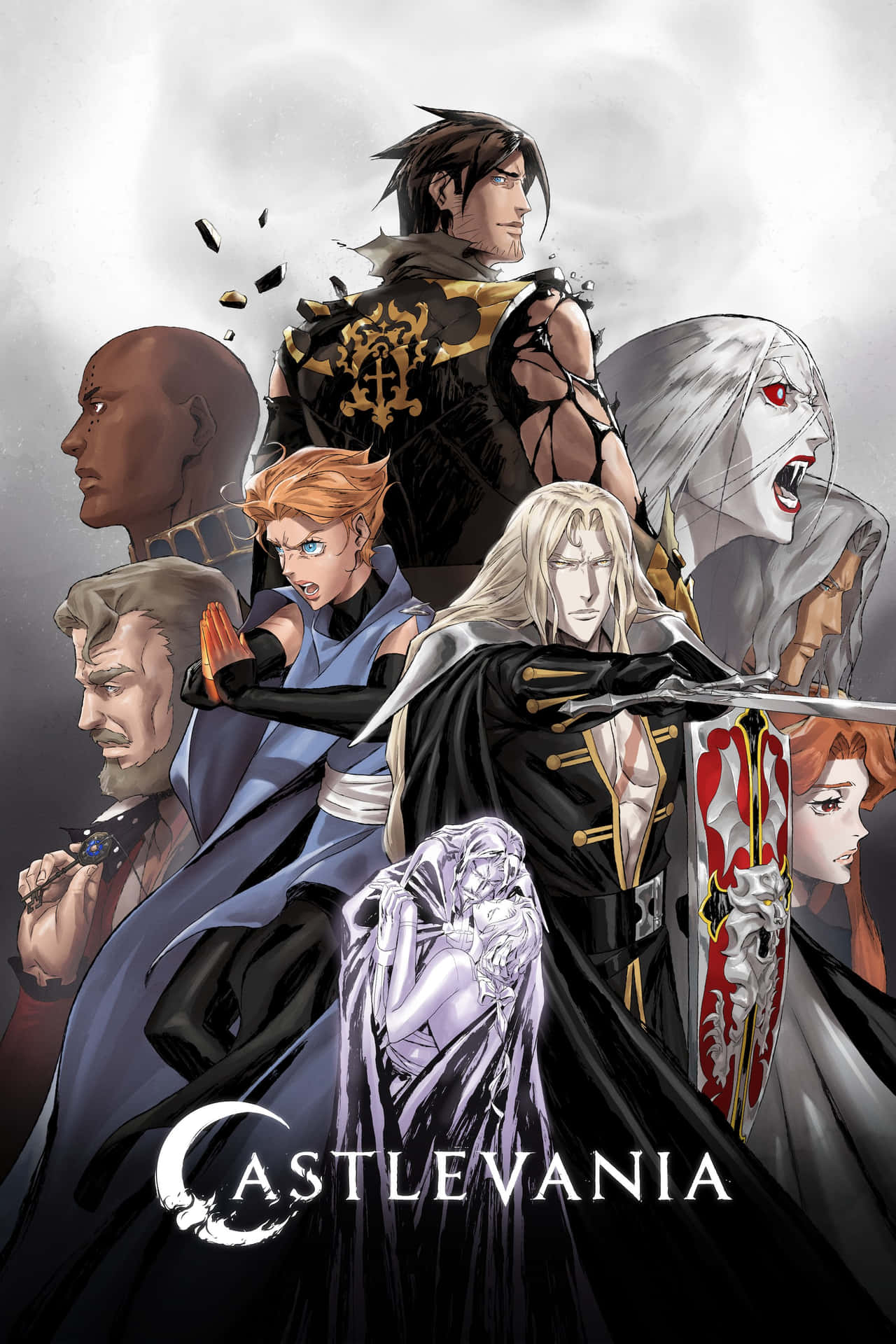
Castlevania: Symphony of the Night (1997) marked a seismic shift in the franchise, transforming it from a family-friendly action-platforming series into a mature, narrative-driven experience. Its departure from linear progression and gothic horror themes redefined expectations, influencing not only subsequent Castlevania titles but also the broader metroidvania and indie game genres. This evolution began with incremental changes in earlier entries, culminating in SoN’s bold reinvention, which balanced exploration, RPG mechanics, and atmospheric storytelling in a way no previous game had achieved.
The transition from Castlevania III: Dracula’s Curse (1989) to Rondo of Blood (1993) laid the groundwork for SoN’s radical departure. While Dracula’s Curse retained the series’ traditional action-platforming core, Rondo of Blood—developed by Irem and directed by Koji Igarashi—introduced darker visuals, a more complex narrative, and RPG elements like leveling and equipment. Though canceled in Japan due to censorship concerns, its influence persisted, particularly in its use of gothic aesthetics and non-linear exploration. SoN refined these concepts, expanding them into a fully realized metroidvania structure that prioritized player freedom and lore immersion.

Chronological Breakdown of Key Castlevania Titles Leading to Symphony of the Night
The Castlevania series underwent significant tonal and mechanical shifts before Symphony of the Night, each title contributing to its eventual reinvention. Below is a chronological overview of pivotal releases, highlighting how they diverged from the original formula:
- Castlevania (1986, NES) – The series debut established the core gameplay loop: linear progression through Dracula’s castle, defeating enemies, and collecting hearts to gain extra lives. Its pixel-art visuals and chiptune soundtrack defined the era’s action-platformers.
- Castlevania II: Simon’s Quest (1987, NES) – A side-scrolling adventure game that abandoned combat in favor of exploration and puzzle-solving. Its narrative focus on Simon Belmont’s quest to rescue his sister foreshadowed later Castlevania titles’ emphasis on storytelling.
- Castlevania III: Dracula’s Curse (1989, NES) – Introduced multiple playable characters (Trevor Belmont, Grant Danasty, Sypha Belnades) and expanded the lore, but retained linear stage-based progression. Its darker tone hinted at future maturity in the series.
- Castlevania: Bloodlines (1994, SNES) – A spiritual successor to Dracula’s Curse, featuring co-op gameplay and a more open-ended structure. Though still action-platformer-heavy, it experimented with RPG mechanics like character classes and branching paths.
- Castlevania: Rondo of Blood (1993, PC Engine/Turbografx-16) – Canceled in Japan due to its violent content, this title introduced gothic visuals, a darker narrative, and RPG elements like experience points and weapon upgrades. Its influence on Symphony of the Night is undeniable, particularly in its world design and atmosphere.
- Castlevania: Symphony of the Night (1997, PlayStation) – The culmination of these experiments, SoN discarded linear progression entirely, replacing it with a fully interconnected world, RPG mechanics, and a mature, gothic horror aesthetic.
Design Philosophy: How Symphony of the Night Departed from Predecessors
Castlevania: Symphony of the Night redefined the franchise by integrating metroidvania and RPG elements into its core design. Unlike earlier titles, which relied on linear stage-based progression, SoN emphasized non-linear exploration, backtracking, and player-driven discovery. Below is a comparative table illustrating the mechanical shifts between key Castlevania titles:
| Game | Primary Genre | Progression System | World Design | Narrative Depth | Key Innovation |
|---|---|---|---|---|---|
| Castlevania (NES, 1986) | Action-Platformer | Linear (stage-based) | Single-screen or segmented levels | Minimal (vague lore) | Introduced the Whip mechanic |
| Castlevania III: Dracula’s Curse (NES, 1989) | Action-Platformer | Linear (character-specific paths) | Multi-character stages | Expanded lore (Dracula’s backstory) | Multiple playable protagonists |
| Castlevania: Rondo of Blood (PC Engine, 1993) | Action-RPG | Semi-linear with branching paths | Interconnected areas (limited) | Dark narrative (Dracula’s curse) | RPG mechanics (EXP, weapons) |
| Castlevania: Symphony of the Night (PS1, 1997) | Metroidvania/RPG | Non-linear (player choice) | Fully interconnected world | Deep lore (Alucard’s identity) | Backtracking, RPG systems, gothic atmosphere |
SoN’s design philosophy centered on player agency, allowing exploration of Dracula’s castle without rigid stage gates. The game’s metroidvania structure required players to unlock new areas by defeating bosses and acquiring keys, while its RPG mechanics (leveling, equipment, and stat upgrades) added depth to combat. This hybrid approach was revolutionary, blending the precision of action-platforming with the freedom of RPGs.
Konami’s Shift Toward a Darker, Mature Tone
The decision to mature the Castlevania franchise was driven by Koji Igarashi, who took over as director for Symphony of the Night after working on Rondo of Blood. In interviews, Igarashi emphasized the need to distance the series from its Nintendo roots, citing censorship and market trends as motivators. He stated:
“The original Castlevania was a family-friendly game, but we wanted to explore darker themes and a more adult audience. Symphony of the Night was our chance to create something fresh while staying true to the lore.”
Michiru Yamane, the game’s composer, further contributed to its mature tone through atmospheric soundtracks that evoked gothic horror. The game’s visual style, designed by Ayami Kojima, abandoned the series’ traditional pixel-art aesthetic in favor of anime-inspired character designs and detailed gothic architecture. This shift was intentional, aiming to appeal to older audiences while maintaining the franchise’s identity.
Visual and Aesthetic Innovations in Symphony of the Night
SoN’s visual design was a departure from earlier Castlevania titles, embracing a gothic horror aesthetic that influenced the series’ future direction. Key elements included:
- Character Designs by Ayami Kojima – Alucard’s androgynous, vampire-like appearance and the cast’s elaborate outfits (e.g., Dr. Stein’s lab coat, Shaft’s pirate attire) set a new standard for the franchise. The designs leaned into anime-inspired proportions, contrasting with the pixelated characters of earlier games.
- Gothic Architecture – Dracula’s castle featured detailed, interconnected levels, from the Clock Tower’s eerie halls to the Underground Waterway’s submerged ruins. The game’s pre-rendered backgrounds (a limitation of PlayStation hardware) enhanced its cinematic quality, making the world feel vast and immersive.
- Lighting and Atmosphere – SoN’s use of dynamic lighting (e.g., flickering candles, moonlight through stained glass) created a haunting ambiance. The game’s color palette—deep purples, blacks, and blood reds—reinforced its gothic theme.
- Movement System
- Combat Mechanics
- Whip Mechanics:
- Basic Slash: Light, fast attacks for crowd control.
- Charge Attack: Mid-range slash with delayed impact, useful for staggering enemies.
- Vampire Kill: Instant kill on contact (charged whip + enemy collision). Effective against armored foes like Armored Knights or Medusa Heads.
- Sub-Weapon Synergy: Pairing sub-weapons with the whip creates combo potential. For instance:
- Axe + Whip: Horizontal cleave for wide-area damage (ideal for boss fights).
- Holy Water + Whip: Piercing projectiles that bypass enemy armor (critical for Death or Dracula).
- Dagger (early game): Fast but weak; replaced by stronger sub-weapons later.
- Item Utility:
- Healing Items: Cross (heals 1 heart), Potion (full restore), Holy Water (damage + heal).
- Environmental Tools: Candle (reveals darkness), Boomerang (retrieves items), Money Bags (currency for upgrades).
- Undead (Zombies, Skeletons): Vulnerable to Holy Water or Cross.
- Armored Enemies (Knights, Medusa): Require Vampire Killer or Axe for damage.
- Flying Enemies (Bats, Flea): Targeted by Dagger or Boomerang.
- Exploration and Map Unlocking
- Door and Gate Requirements: Areas like the Cave or Town demand specific items (e.g., Cave Key, Town Key) or upgrades (e.g., Holy Water for the Cathedral).
- Hidden Paths: Wall jumps and whip swings often lead to secret rooms containing Medallions (currency for major upgrades) or heart refills.
- Boss Gates: Defeating bosses (e.g., Death, Dracula) unlocks new regions, such as Stage 0 (a post-game hub).
- Early Game: Castle Dracula and Basic Whip Combat
- Movement: Double jumps to navigate the castle’s towers and courtyards.
- Combat: Basic whip slashes against Zombies and Bats.
- First Upgrades:
- Holy Water (purchased in Town for 1000 hearts) unlocks access to the Cathedral.
- Medallions (found in hidden rooms) are exchanged for sub-weapons (e.g., Axe at 500 Medallions).
- Critical Early-Game Goals:
- Collect 5 Heart Refills (sold in Town) to upgrade the Crimson Whip.
- Find the Cave Key (hidden in the Castle’s basement) to access the Cave.
- Defeat Armored Knights to practice Vampire Killer combos.
- Common Mistake: Ignoring the Town for upgrades, leading to difficulty scaling early bosses like Death.
- Mid Game: Cave, Town, and Holy Water Acquisition
- Weapon Upgrades: Spending Medallions on stronger sub-weapons (e.g., Axe → Vampire Killer).
- Boss Preparation: Stocking up on Holy Water and Potions before facing Death or Dracula.
- Mid-Game Progression Path:
- Cave: Collect Medallions (hidden in Bat caves and secret rooms).
- Town: Purchase Holy Water (essential for Death’s fight) and Boomerang (for item retrieval).
- Cathedral: Defeat Medusa to obtain the Medallion required for Stage 0 access.
- Hidden Secrets:
- Shanoa’s Room (in Town) contains a hidden door leading to a Medallion.
- Dracula’s Study (post-Death) holds a secret passage to Stage 0.
- Late Game: Stage 0, Boss Rush, and Alucard’s Final Form
- Boss Rush Mode: A series of optional boss fights (including Dracula) for Medallions.
- Final Upgrades: The Vampire Killer (purchased for 3000 Medallions) and Alucard’s Dark Form (unlocked via 100% completion).
-
Late-Game Checklist for
Lore and Characters: Unraveling Dracula’s Legacy in Castlevania: Symphony of the Night
Castlevania: Symphony of the Night (1997) redefined the franchise by blending Gothic horror with deep, interconnected lore, transforming Dracula’s curse into a tragic saga of lineage, betrayal, and redemption. Unlike its predecessors, Symphony of the Night (SoN) presents a non-linear narrative where the past, present, and future collide, revealing Dracula’s origins as a fallen prince cursed with immortality, his descendants’ struggles, and the Church’s relentless crusade against the undead. The game’s lore is woven into its world through environmental details, character backstories, and cryptic dialogues, creating a dark fantasy universe where every faction—vampires, humans, and rebels—shares a fractured destiny. This section explores the intricate web of Dracula’s legacy, dissecting the vampire lineage, the Church’s role, and the tragic arcs of its most pivotal characters, while examining how SoN’s storytelling contrasts with other dark fantasy RPGs.The Origins of Dracula: Immortality, Fall, and the Loss of Castle
Dracula’s backstory in Symphony of the Night is a mythic tragedy rooted in ancient betrayal and divine punishment. Originally a mortal prince, Dracula was cursed with vampirism after defying a celestial entity—later revealed to be Death—who sought to claim his soul. The curse granted him immortality but bound him to the night, transforming him into the monstrous lord of Castle Dracula. His fall is tied to the moon, a recurring motif in the series, symbolizing both his power and his eventual downfall. The castle itself, once a symbol of his glory, becomes a crumbling fortress in SoN, reflecting the decay of his legacy and the cyclical nature of his wars. The game’s lore hints that Dracula’s initial curse was not purely malevolent; his transformation was a consequence of his defiance against forces beyond his control. However, his centuries of tyranny and his obsession with reclaiming his lost castle drive him to extreme measures, including the creation of Alucard and the manipulation of his descendants. The Medallion, a holy artifact capable of sealing Dracula, becomes the focal point of the Church’s crusade, while the castle’s ruins serve as a battleground for his final confrontation with Alucard. Environmental storytelling in SoN underscores this decay—crumbling statues, overgrown gardens, and abandoned chambers all echo the passage of time and the inevitability of Dracula’s demise.The Vampire Lineage: Alucard, Death, and the Cursed Bloodline
Dracula’s lineage is a complex tapestry of power, ambition, and tragedy, with each descendant embodying different facets of his curse. The most prominent members include Alucard, Death, and Moroboshi, whose lives are intertwined with the fate of Castle Dracula."I am the son of Dracula... but I am not a monster." — Alucard, Castlevania: Symphony of the Night
Alucard, Dracula’s son, is the central figure of SoN’s narrative. Born from Dracula’s union with a human woman, Alucard was raised by the Church as Julius Belmont, a descendant of the Belmont clan, before discovering his true nature. His duality—caught between his monstrous heritage and his humanity—defines his character. Alucard’s backstory in Castlevania III: Dracula’s Curse and Rondo of Blood reveals his early struggles with his identity, culminating in his decision to fight against his father’s tyranny. In SoN, he seeks to break the cycle of violence by destroying Dracula, symbolizing the possibility of redemption within the cursed bloodline. Death, Alucard’s half-brother and Dracula’s grandson, represents the darker evolution of the vampire curse. Born from Dracula’s union with Moroboshi, Death is a reincarnation of the entity who initially cursed Dracula, embodying both divine judgment and vampiric corruption. His role as the Dark Lord in SoN’s true ending underscores the inevitability of Dracula’s legacy—no matter how many times he is defeated, the curse persists. Death’s connection to the moon and his ability to manipulate time further cement his role as the ultimate heir to Dracula’s throne. Moroboshi, a vampire lord and Death’s father, serves as a tragic figure whose betrayal of Dracula leads to his downfall. Once a loyal ally, Moroboshi’s ambition and desire for power drive him to seek the Medallion, ultimately resulting in his transformation into Death. His fate highlights the destructive nature of Dracula’s curse, where even those who oppose him become ensnared in its cycle.Shanoa: The Tecnica Descendant and Her Connection to Death
Shanoa, a descendant of the Tecnica, a secretive order of vampire hunters, plays a crucial role in SoN’s narrative as both an ally and a tragic victim. Her Tecnica powers, derived from an ancient vampire-hunting lineage, allow her to wield supernatural abilities, including summoning Death as a weapon. Shanoa’s relationship with Death is one of the game’s most poignant subplots; she is unaware that Death is her own descendant, a revelation that adds layers to her fate. Shanoa’s arc is marked by her unwavering loyalty to Alucard and her struggle against the forces of darkness. Her tragic death at the hands of Death (who she summons in a moment of desperation) serves as a turning point in the game, symbolizing the inescapable nature of Dracula’s curse. Her final words—"I am sorry, Alucard..."—resonate as a lament for the cycle of violence she could not break. Shanoa’s character also reflects the game’s themes of decay and sacrifice, as her powers and fate are intrinsically linked to the very forces she seeks to destroy.Soma Cruz: Humanity vs. Monstrosity and the Final Transformation
Soma Cruz, the game’s protagonist, embodies the conflict between humanity and monstrosity, a theme central to Symphony of the Night. Initially a human boy adopted by the Belmont clan, Soma is revealed to be the reincarnation of Alucard, destined to fulfill his legacy. His journey mirrors Alucard’s own struggles, as he grapples with his vampiric heritage while retaining his compassion and humanity. Soma’s relationship with Sypha Belnades, a vampire hunter and descendant of the Belmonts, adds another layer to his duality. Sypha’s initial hostility toward Soma stems from her belief that he is a monster, but their bond evolves into one of mutual respect and love. This dynamic underscores the game’s exploration of redemption and acceptance, as Sypha ultimately chooses to stand beside Soma despite his monstrous nature. Soma’s final transformation into Alucard is not a loss of humanity but a fulfillment of his destiny, bridging the gap between his mortal and immortal selves.The Church vs. Vampires: Holy Water, Medallions, and the Crusade Against the Undead
The Church’s role in Symphony of the Night is that of a relentless adversary, waging a holy war against Dracula and his descendants. Armed with Holy Water, Medallions, and an army of vampire hunters, the Church seeks to eradicate the vampire curse once and for all. Their methods, however, are often brutal and morally ambiguous, reflecting the game’s critique of fanaticism and blind faith. The Medallion, a holy artifact capable of sealing Dracula, is the Church’s ultimate weapon. Its power is derived from divine blessings, but its use comes at a great cost—each time it is employed, it weakens the wielder and risks unleashing even greater darkness. This theme is exemplified in Sypha’s rebellion, where she questions the Church’s methods and ultimately turns against them. Her defiance highlights the game’s exploration of moral ambiguity, as even those fighting against Dracula are not without their own sins.Sypha Belnades’ Rebellion and Her Role as a Double Agent
Sypha Belnades, a vampire hunter and descendant of the Belmont clan, begins Symphony of the Night as a devoted servant of the Church. However, her journey takes a dramatic turn as she grows disillusioned with the Church’s extremism. Sypha’s rebellion is sparked by her growing affection for Soma and her realization that the Church’s methods are as monstrous as Dracula’s tyranny. Her role as a double agent—initially working against Alucard while secretly aiding him—adds a layer of complexity to the narrative. Sypha’s ultimate choice to side with Alucard and Soma symbolizes her rejection of the Church’s dogma in favor of a more nuanced understanding of morality. Her character serves as a counterpoint to the game’s other factions, representing the possibility of redemption and change even within a cycle of vengeance.Moroboshi
Castlevania: Symphony of the Night remains a testament to how a single game can redefine an entire series while leaving an indelible mark on gaming as a whole. Its fusion of metroidvania exploration, RPG mechanics, and gothic horror created a blueprint for modern action-adventures. From Alucard’s tragic heroism to Dracula’s immortal tyranny, the game’s depth resonates decades later, proving that true innovation lies in daring to break the mold. Whether through its intricate lore, challenging combat, or atmospheric world-building, Symphony of the Night continues to cast its shadow over gaming history.
Gameplay Mechanics: Mastering Castlevania: Symphony of the Night’s Metroidvania and RPG Hybrid
Castlevania: Symphony of the Night revolutionized action-platforming with its seamless integration of Metroidvania exploration and RPG progression. Unlike traditional linear Castlevania titles, Symphony of the Night (SoN) demands mastery of fluid movement, strategic combat, and methodical exploration to unlock its full depth. The game’s mechanics create a dynamic interplay between Alucard’s evolving abilities, weapon synergy, and environmental interaction, setting a benchmark for future titles in the genre. Below is a breakdown of its core systems, progression structure, and tactical depth, analyzed through the lens of a player aiming for 100% completion.
Core Mechanics: Movement, Combat, and Exploration Synergy
The foundation of Symphony of the Night lies in its movement and combat mechanics, designed to feel weighty yet responsive. Alucard’s mobility is built on three pillars: ground movement, aerial maneuverability, and weapon-based interactions.
SoN introduces double jumps, wall jumps, and dashes, allowing precise platforming across its sprawling castle and hidden areas. The double jump (holding jump button mid-air) enables vertical mobility, while wall jumps (jumping off walls) facilitate horizontal traversal. These mechanics are essential for accessing high ledges, dodging attacks, and navigating tight spaces in dungeons. The dash attack (tapping attack button while moving) serves as both an offensive tool and a mobility aid, letting players close gaps or escape danger.
"Movement in SoN is not just about reaching a destination—it’s about adapting to combat scenarios mid-air or on walls."
The game’s physics-based interactions (e.g., swinging from chandeliers, breaking barriers) further deepen exploration. For example, the whip’s reach can pull Alucard toward distant ledges or activate hidden mechanisms, blending combat with progression.
Combat in Symphony of the Night revolves around whip attacks, sub-weapons, and item-based strategies. The Crimson Whip is Alucard’s primary weapon, with charge attacks (holding the attack button) delivering powerful slashes or Vampire Kills (piercing enemies for instant kills). Sub-weapons—secondary arms like the Axe, Holy Water, or Cross—are selected via the L1/R1 buttons and require heart refills (collected as currency) to upgrade.
Combat is further refined through enemy weaknesses:
"Understanding enemy patterns and weapon matchups transforms SoN from a challenge into a strategic duel."
Symphony of the Night employs a non-linear progression system, where areas are unlocked via keys, medallions, or upgrades. The map (accessed via Map Stone) highlights explored regions but does not reveal secrets, encouraging organic discovery. Key exploration mechanics include:
The game’s lack of a minimap in the original PS1 version forces players to memorize layouts, while the remake’s radar (2020) aids navigation without spoiling secrets.
Progression Structure: Unlocking Areas, Weapons, and Abilities
Progression in Symphony of the Night is non-linear but gated, requiring players to balance exploration, combat, and item collection. Below is a step-by-step breakdown of key milestones, categorized by game phases.
The game begins in Castle Dracula, where players learn core mechanics:
With the Cave Key, players unlock the Cave, a hub for heart refills and Medallions. The Town becomes a central location for:
After defeating Death, players unlock Stage 0, a post-game hub with:
Leave a Comment
Comments are moderated before appearing. The data you submit is processed according to the Privacy Policy of Refer.